Holding Onto the Human Moment
Music has always lived in two worlds at once: the invisible and the physical. It moves through the body, but it also moves through the air. It belongs to memory, but it also belongs to the room. A song can feel deeply personal, almost private, and yet the moment it is played out loud, it becomes communal. That dual nature is part of what makes music so powerful. It is both intimate and shared, fragile and unforgettable.
Technology has always had a role in shaping that experience, even before we used the word in the modern sense. Instruments themselves are technologies. The architecture of a concert hall is technology. The microphone, the radio, the vinyl record, the cassette tape, the CD, the MP3, the livestream, the platform, the algorithm — all of them have changed not only how music is distributed, but how it is imagined, performed, remembered, and valued.
And yet, for all the speed and convenience technology offers, one question remains stubbornly important: how do we use technology without losing the human core of music?
That question matters deeply to us at Denj, because Denj lives exactly in that space — between the live moment and the recorded one, between the room and the screen, between a performance that happens once and an archive that can keep giving long after the night is over.
Music Was Never Meant to Stay Still
At its origin, music is movement. It is breath leaving the body. It is vibration. It is rhythm traveling from one nervous system to another. Long before recording existed, music was already about transmission. It moved from person to person, from teacher to student, from parent to child, from gathering to gathering. It traveled through memory and repetition. It changed as it moved. It adapted to place, language, need, and time.
That older way of sharing music had a beautiful vulnerability to it. A performance happened, and then it was gone. What remained was memory, perhaps a feeling in the body, perhaps a phrase hummed on the way home, perhaps a story told later. The disappearance was part of the magic.
Recording technology changed that forever. For the first time, music could outlive the room in a more literal way. A voice could be heard after the singer had left. A melody could travel to places the performer had never seen. A single performance could become a repeatable object. That changed everything.
It expanded access. It democratized listening. It created entire industries and genres. It preserved traditions that might otherwise have vanished. It allowed artists to reach audiences across borders, across class, across geography, and across time.
But it also introduced a tension that still defines music culture today: when music becomes infinitely repeatable, what happens to the value of the live moment?
The Promise and Problem of Access
One of the greatest gifts technology has given music is access. This cannot be overstated. There are people today who can hear artists they would never have had a chance to encounter otherwise. A teenager in one country can discover the voice of a singer from another continent in seconds. A niche musical tradition can reach listeners far beyond its place of origin. A recording can comfort someone alone at night on the other side of the world.
For communities shaped by migration, exile, censorship, or political instability, this access is not just convenient — it is emotionally and culturally essential. Music becomes a bridge to language, memory, and identity. It can connect people back to home, or help them imagine a new kind of home.
This is especially meaningful for the kinds of artists and audiences Denj cares about: artists working across Farsi-speaking and related communities, artists whose work may not always be centered by mainstream systems, artists whose audiences may be spread across provinces, countries, and time zones. For many of these listeners, digital access is not secondary. It is the only way in.
And yet access alone is not enough. Easy access can sometimes flatten the experience of music. When every song is available instantly, music can become disposable. It can slide into the background of daily life. It becomes something we scroll through, skip, half-hear, and move past. Technology gives us abundance, but abundance can weaken attention.
This is one of the strange paradoxes of the digital age: we have more access to music than ever before, and sometimes we listen less deeply than ever before.
Listening Is a Technology Too
It may sound strange to say it, but listening itself is a technology — a human one. It is a way of shaping attention. It has methods, habits, and conditions. Different environments produce different kinds of listening. A nightclub creates one form of attention. A concert hall creates another. Headphones on a late-night walk produce something else entirely.
Technology is not only about devices. It is also about the systems and conditions that make an experience possible.
A microphone changes how a singer phrases a line. A camera changes how a performer inhabits a stage. A streaming platform changes how long someone will stay with a piece before clicking away. A subtitle can open access for one viewer while slightly changing the rhythm of how another viewer receives the song. A good edit can preserve intimacy; a bad edit can kill it.
This is why thoughtful use of technology matters so much. Technology is never neutral in practice. It shapes behavior. It changes how artists perform and how audiences receive. It either protects the emotional truth of a performance or gets in the way of it.
At Denj, this question is central: how can technology help us listen better instead of merely consuming faster?
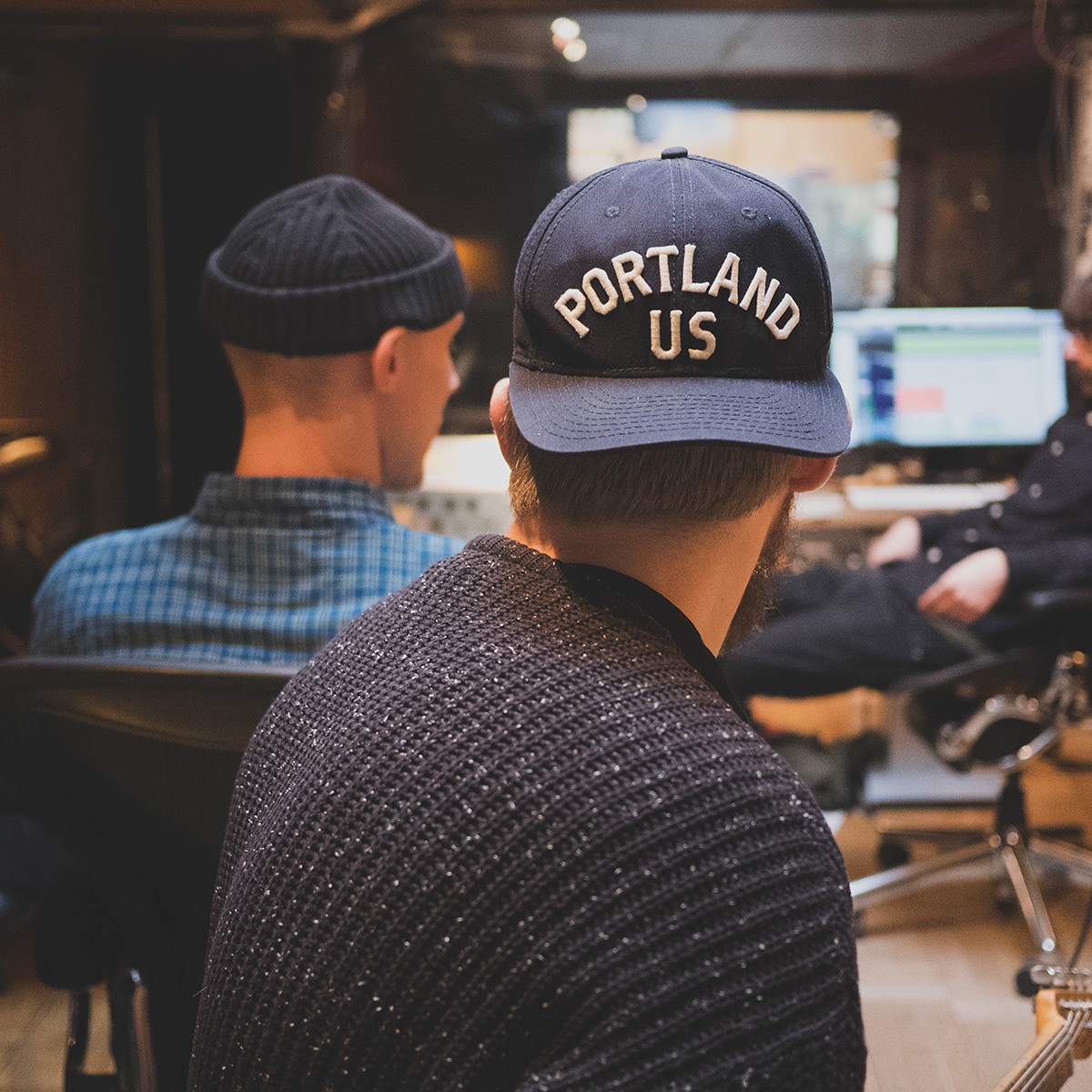
For us, that means building sessions where the live experience still comes first. The room matters. The audience matters. The nearness matters. The music is not treated like background decoration or social noise. It is the event. Then, after protecting that live moment, technology steps in to preserve and extend it: professional sound, careful video, thoughtful editing, bilingual metadata, subtitles, and online release. The purpose is not to replace the room. The purpose is to let the room travel.
The Camera Is Not the Enemy
There is sometimes an understandable suspicion around recording live music. People worry that cameras will make the event feel staged or stiff. They worry the audience will become self-conscious. They worry the performers will begin playing for the lens instead of for the people in front of them.
Those risks are real. But they are not inevitable.
A camera becomes a problem when it dominates the experience. When it demands too much attention. When it turns the live event into raw material rather than a meaningful event in itself. When it treats the room as a temporary inconvenience on the way to “content.”
But a camera can also be a witness. It can observe quietly. It can be framed with respect. It can preserve details that memory alone would lose — a glance between musicians, the texture of a breath before a phrase, the way a room settles into silence.
The same is true of audio recording. Poor sound capture can flatten or distort a performance. Great sound capture can preserve emotional detail so well that a future listener feels the shape of the room even through speakers or headphones.
The goal is not perfection in the abstract. The goal is fidelity to the feeling. Not sterile correctness, but emotional truth.
That is why Denj treats documentation as a craft, not an afterthought. The recording is not simply proof that something happened. It is part of how the work continues to live.
Music, Memory, and Survival
Technology’s relationship to music is not only aesthetic. It is historical and political. Recording and distribution can act as forms of preservation, especially for communities whose stories are often under-documented or disrupted by migration, censorship, or conflict.
Sometimes the value of recording is not obvious in the moment. A performance might feel small, local, temporary. But years later, that documentation becomes evidence: evidence of a scene, a language, a mood, a generation, a network of artists who were building something under difficult conditions.
Archives matter. Not only institutional archives, but living, public, searchable ones. Archives that allow people to find artists, trace lineages, and understand that a cultural ecosystem exists.
In many music communities, especially ones that are fragmented by geography or politics, the archive is thin. Major names get documented; emerging or local artists disappear. Big media favors visibility that is already visible. The rest survives only in memory, scattered phone clips, or not at all.
That gap is not just unfortunate — it shapes the future. Artists without documentation have a harder time getting booked, funded, reviewed, remembered, and discovered. Audiences have fewer pathways into the richness of the scene. A culture becomes legible only through its loudest representatives, while quieter, stranger, newer, or more local voices remain hidden.
Technology, used intentionally, can help repair that imbalance.
The Small Room and the Wide World
There is something deeply beautiful about the tension between a small room and a wide audience. A performance can happen in front of forty people and still matter to thousands more. In fact, the smallness of the room can be part of why the recording feels powerful. It contains concentration. It has edges. It creates intimacy.
Not every performance needs a massive crowd to feel important. Some music becomes more alive when the room is smaller, when listeners are close enough to hear the details and vulnerable enough to pay attention.
This is one of the guiding ideas behind Denj: small room, wide reach.
The live audience experiences the closeness of the moment. The online audience receives a version of that intimacy through careful recording and editing. These are not identical experiences, and they should not be. The value of being there in person remains distinct. But digital transmission can still carry something real enough to move, enough to connect, enough to make someone feel less far away.
This matters for many reasons. Not everyone can attend a show in person. Some people cannot afford it. Some live too far. Some are caring for family. Some have mobility needs. Some live in places where seeing certain artists is difficult or impossible. Some are simply outside the network where that event would ever reach them.
When a live session is released online with care, it says: the room matters, but it does not belong only to the room.
What Technology Cannot Do
For all its usefulness, technology also has limits. It cannot create sincerity where none exists. It cannot fake a real connection between artist and audience. It cannot generate soul simply through higher resolution, cleaner sound, smarter platforms, or better metadata.
It can amplify what is already alive. It can preserve what is already meaningful. But it cannot replace the human work of making something worth hearing.
And maybe that is a relief.
Because it means the center still holds. The song still matters. The performer still matters. The listener still matters. The room still matters. Technology is powerful, but it is not the source of meaning. It is the frame, the bridge, the amplifier, the memory tool.
This is why the question is not whether technology belongs in music. It always has. The question is whether we are using it in the service of attention, care, and access — or in the service of speed, noise, and forgetting.
The Future Is Hybrid, but It Must Stay Human
We are already living in a hybrid musical world. Live and digital are no longer opposites. They feed each other. A performance generates a recording; a recording creates desire for the live event; a clip becomes discovery; discovery becomes community; community becomes the next roomful of listeners.
The artists who thrive in this world are not necessarily the loudest, but often the ones who understand how to move between formats without losing themselves. The presenters who matter are not only the ones who put on events, but the ones who know how to turn those events into sustainable cultural traces.
That is part of what Denj hopes to become: not only a concert series, but a living document of artists, moments, and communities that deserve to be seen and heard with care.
Technology makes that possible. But the real work remains human: choosing thoughtfully, listening seriously, documenting responsibly, and remembering that every file, stream, subtitle, and upload begins with someone standing in a room, making sound for other people.
In the End, Music Still Asks for Presence
For all the talk of platforms and gear and formats, music still asks the same thing it always has: presence.
Presence from the artist, who must offer something real.
Presence from the audience, who must listen.
Presence of the people behind the scenes, who must make the conditions for that exchange possible.
And presence from the technologies we choose, which should support the moment rather than dominate it.
When technology serves presence, music expands without thinning out. It reaches farther without becoming empty. It remains local and global, immediate and lasting, intimate and shareable.
That is the dream, really — not that technology will save music, but that it will help us hold onto what music already gives us: memory, feeling, community, and the rare experience of being fully alive in the same moment as someone else.
At Denj, that is the hope behind every session. Use the tools. Respect the craft. Protect the live moment. Then let it travel.
Because music was never meant to stay still.